Standing Seam or Corrugated Metal Roof? How the Profiles Actually Differ
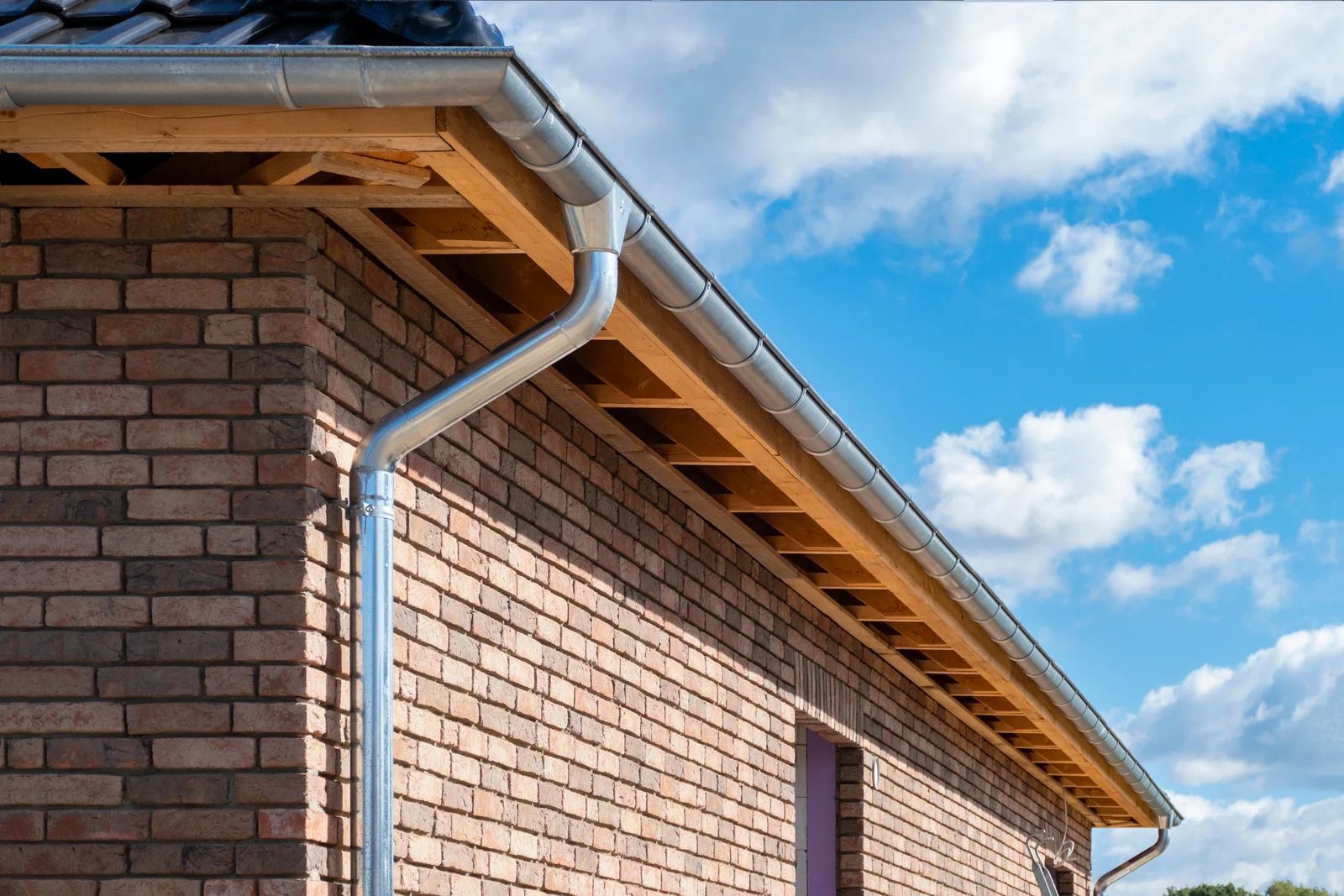
A proper assessment starts with mapping the actual drainage area feeding each downspout, not just eyeballing the roofline. That means accounting for every roof plane that sheds toward a given gutter section, any valleys that concentrate flow into a specific point, and the true square footage each outlet is responsible for, then comparing that against the downspout's rated capacity. Where a corner is taking on more than its outlet can move, the fix might be upsizing that specific downspout, adding a second outlet closer to the valley discharge point, or installing a diverter that breaks up the concentrated stream before it hits the trough. Sometimes it's a combination of two of those, since a bigger downspout doesn't help much if the water is still overshooting the gutter before it ever reaches the outlet.
Quick Answer: The real difference between a standing seam and a corrugated metal roof is how the panels are held down. Standing seam panels lock together at raised seams and are fastened with hidden clips, so no screw ever passes through the weather surface. Corrugated panels are screwed straight through the face with rubber washered screws, so every fastener is an exposed opening that depends on a small gasket. That one choice drives how each roof handles heat movement, where it leaks, how long the paint lasts, and how it looks.
You are standing in the driveway with two roofing samples in your hands. One is a flat, smooth panel with a tall rib on each edge. The other is the wavy sheet you remember from barns, patio covers, and the garage behind your grandfather's house. Both are metal. Both are painted steel or something close to it. A contractor told you both would hold up to the sun in the San Fernando Valley, and from where you stand they look like cousins. They are not. They are built on two different ideas about how a roof should keep water out, and the gap between those ideas shows up years later, usually during the first hard rain after a long dry summer.
This guide walks through the actual differences, one at a time, so you can match the profile to the building instead of guessing from a sample in your hand.
The One Difference Everything Else Grows From
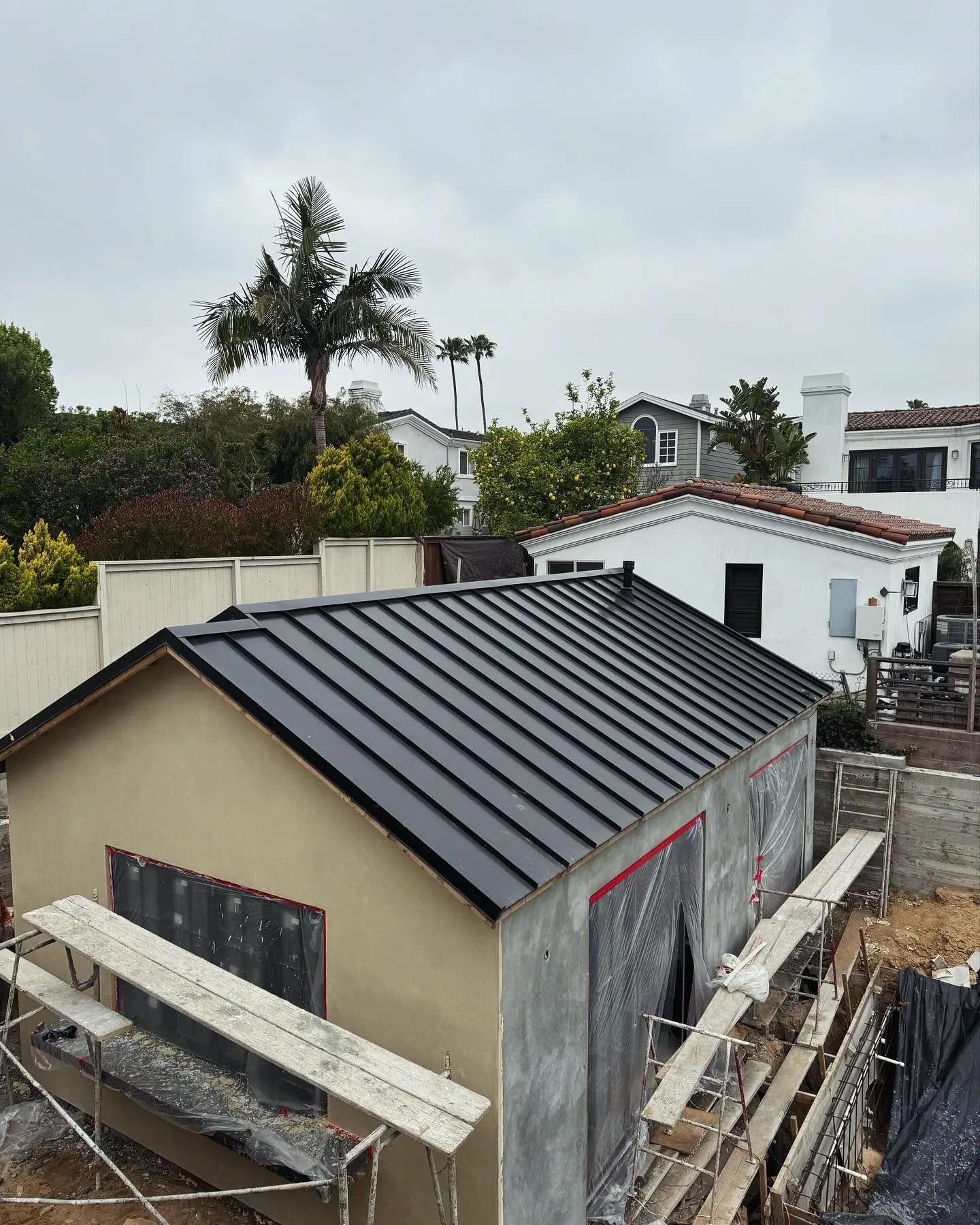
Look at how each panel is attached and most of the rest explains itself. A standing seam panel has a vertical rib along each edge. Panels sit side by side, and the ribs lock together, either by snapping into one another or by being mechanically crimped with a seaming tool. Underneath, small metal clips grab the panel edge and are screwed into the roof deck. The screws land in the clip, not in the panel, and the next panel covers them. From the street, from the ladder, and from the attic, you never see a fastener head on the roof surface.
Corrugated metal, which also goes by screw down or exposed fastener panel, takes the opposite approach. The panel is laid on the roof and driven through the flat of the metal with a screw. Each screw carries a small rubber or neoprene washer under its head, and that washer is the only thing standing between the hole and the weather. A typical roof has hundreds of those holes. Ribbed variants such as R panel belong to the same exposed fastener family, so the comparison in this article applies to them as well.
Neither system is a mistake. They solve different problems, and a lot of confusion comes from treating them as the same product at different levels of polish.
Fasteners: Clips Versus Washers
A hidden clip system has no weather facing holes to protect. Water runs down the panel flat, hits the seam, and keeps going toward the gutter. The seam is raised above the water line, so even a heavy sheet of water moving across the roof has to climb over a vertical rib to get in.
An exposed fastener roof relies on rubber. Rubber and Southern California sun do not get along. Months of direct heat, strong ultraviolet light, and daily temperature swings slowly harden and crack those washers. Roofers in several parts of the country report that neoprene washers begin to fail somewhere in the range of nine to fifteen years, and desert style sun can push that earlier rather than later. When a washer goes, the screw hole beneath it is open to every storm.
The screw itself also changes over time. As the metal heats and cools, it pushes against the fastener, and fasteners can slowly back out of the deck. A screw that has lifted a fraction of an inch no longer compresses its washer, and the seal is gone even if the rubber still looks fine.
Tip:
Walk the roof edge with binoculars or look at a photo taken from a drone or ladder. On a corrugated roof, look for washers that have flattened, cracked, or turned chalky, and screw heads that sit proud of the panel. Those are the early signs of a roof whose fasteners need attention before the next storm.
Heat Movement: Floating Panels Versus Pinned Panels
All metal grows when it heats and shrinks when it cools. On a bright Woodland Hills afternoon a dark roof panel can run much hotter than the air, then cool down sharply at night. Over a long panel that cycle adds up to real movement, every single day.
A standing seam panel is allowed to move. The clips hold the panel edge to the structure but let the metal slide along the clip as it expands and contracts. The panel floats. The seams, trims, and flashing details around it are designed with that movement in mind, so the roof moves without tearing any of its own seals.
A corrugated panel is pinned. A screw through the face holds the metal in place at that point, so when the sheet wants to grow it pushes against its own fasteners. Over thousands of cycles the screws loosen, the holes elongate, and the washers lose their grip. This is also why some corrugated roofs make popping and ticking sounds on hot days and cool evenings. The metal is fighting the screws that hold it.
Seams, Laps, and Panel Length
Standing seam panels are commonly roll formed to length, and a panel can run from the eave all the way to the ridge in one piece. No horizontal joint means no horizontal place for water to work its way in.
Corrugated sheets are thinner and more limited in length. On a longer roof slope, two sheets must overlap partway down, and the overlap is held with screws through both layers. That lap is a seam that has to be sealed and resealed, and it is one of the most common places for a leak to begin on an exposed fastener roof.
The trim work follows the same pattern. On a standing seam roof, ridge caps, eave drip edges, rake trims, and valley pieces are typically hemmed and hooked into one another, so the connections interlock and hide their own fasteners. On a corrugated roof, trims are generally laid over the panel and screwed down, which means more exposed screws at the most water sensitive points on the roof.
Metal Thickness and Paint
The panels themselves are usually not the same weight of steel. Standing seam panels are commonly formed from heavier material, around 24 gauge, while corrugated panels often run closer to 29 gauge. A heavier panel resists denting from foot traffic, falling branches, and hail, and it holds a flat appearance on a large roof where a thin sheet can show waviness.
Paint systems tend to differ as well. Corrugated panels are frequently finished with a siliconized polyester coating, which does its job but can begin to chalk and fade after ten to fifteen years of strong sun. Standing seam panels are often finished with a Kynar based fluoropolymer coating, which is formulated to hold color and gloss for far longer under ultraviolet exposure. In Southern California, where roofs see sun for most of the year, the paint system matters as much as the profile. Ask which coating is on the panel before you compare anything else.
Warning:
Do not assume two panels that look alike on a sample board will weather alike. The profile, the metal thickness, and the paint system are three separate choices, and a corrugated panel with a standard polyester finish will age very differently from a standing seam panel with a fluoropolymer finish, even when the color is identical.
How Each Profile Behaves in Local Conditions
Sun And Heat
Both metal roofing profiles can use reflective, cool roof finishes to reduce solar heat. Standing seam systems conceal fasteners beneath panels, while exposed fastener roofs have rubber washers directly exposed to sunlight and heat.
Sudden Heavy Rain
Los Angeles storms can deliver substantial rainfall after long dry periods. Standing seam roofs avoid exposed fastener holes, while aging washers on corrugated panels may fail, allowing water intrusion that causes ceiling stains days later.
Wildfire Embers
Metal panels are noncombustible, making them appealing for hillside properties in Chatsworth, Topanga, and Malibu. However, fire performance depends on the complete roof assembly, including underlayment, eaves, and vents, while tight trims help limit ember entry.
Solar Panels
Standing seam roofs allow solar mounting brackets to clamp onto raised seams without drilling through the metal. Corrugated roofs typically require penetrations, with each opening needing proper sealing to prevent potential water leaks over time.
Low Slopes And Hillside Rooflines
Standing seam systems generally accommodate lower roof pitches than exposed fastener panels because water avoids rows of fasteners. Corrugated panels typically require steeper slopes, so check manufacturer requirements for porches, additions, and gently sloped roofs.
Flashing at Chimneys, Skylights, and Walls
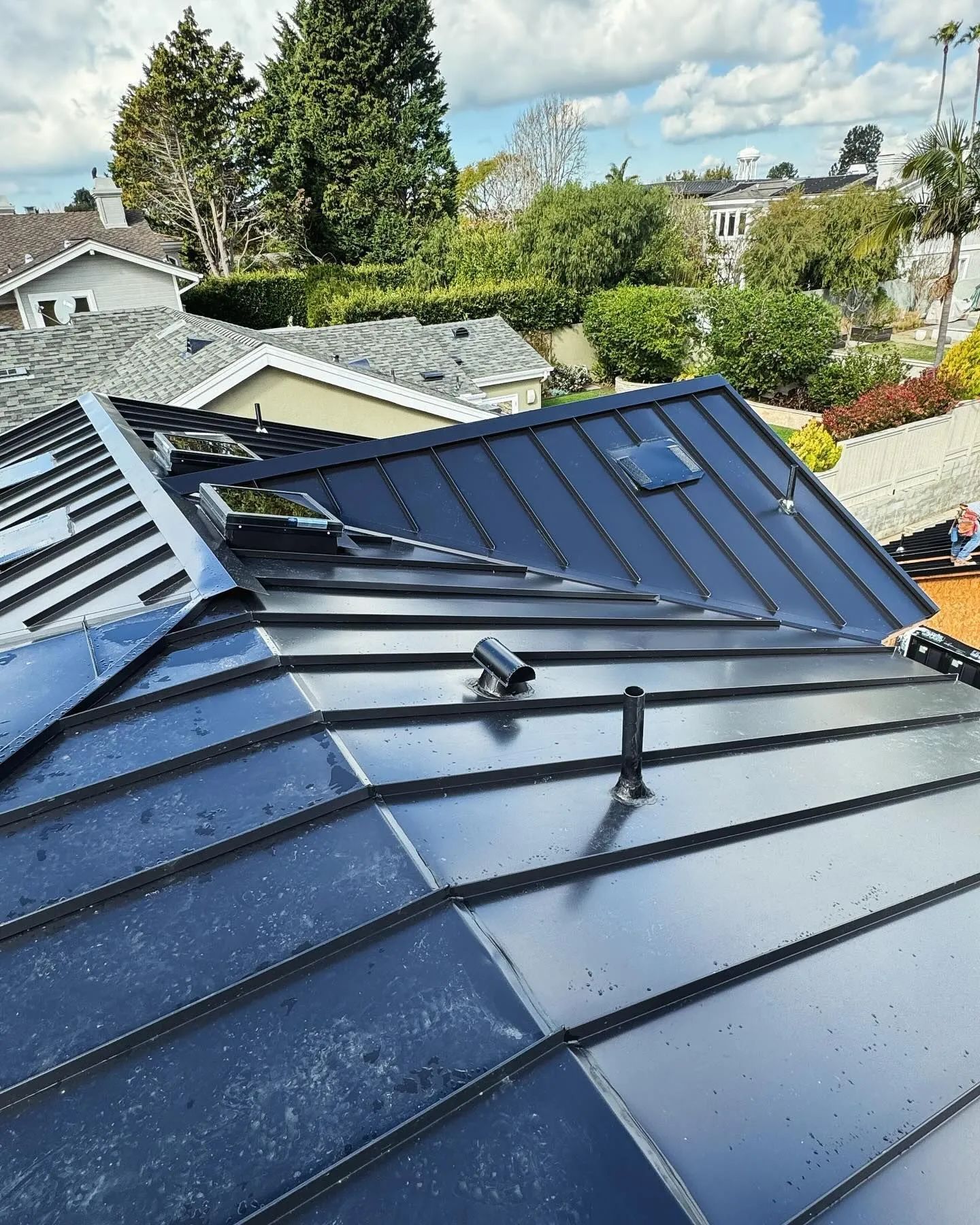
The second most common leak zone is anywhere metal roofing meets something that isn't more roofing. Chimneys, skylights, dormers, and the point where a roof plane meets a vertical wall all require flashing, which is a separate piece of formed metal that bridges the gap and directs water away from the seam instead of into it.
Flashing takes a beating over the years. The caulking or sealant used to finish the edges dries out under UV exposure and starts to crack, usually well before the metal itself shows any wear. Once that seal fails, wind-driven rain can work its way behind the flashing lip during a storm, especially at chimneys where the masonry and metal expand at different rates and slowly pull the flashing loose at the corners.
If your ceiling stain is directly below a chimney, near a skylight, or along an interior wall that backs up to the roofline, flashing is the first place to suspect. This is also one of the more common repair calls after a rare heavy rain, because a flashing seal that held fine through years of light drizzle can finally give out under sustained, driving water.
Tip:
When you spot a stain, look straight up through the attic if you can access it safely. Water often travels along a rafter or sheathing seam before it drips through the ceiling below, so the wet spot on the drywall isn't always directly under the actual leak point on the roof. Tracing the path in the attic first can save you from chasing the wrong section of roof entirely.
Where Corrugated Still Makes Sense
It would be unfair to treat corrugated as the lesser choice for every building. For a workshop, a detached garage, a carport, a storage shed, an equestrian barn, or an agricultural building, an exposed fastener roof is simple, quick to install, and entirely serviceable. These structures are not usually expected to look refined from the street, and a periodic walk across the roof to retighten fasteners and replace tired washers is an acceptable part of ownership.
The trouble starts when a corrugated roof is put on a building where nobody plans to maintain it. A house with a finished ceiling, an attic full of insulation, or a family room under a low roof section does not tolerate a slow fastener leak well. The water finds its way into the insulation first, and by the time a stain shows on the drywall the damage is already underway.
Choosing Between Them for Your Roof
A few honest questions usually settle the decision.
What is under the roof?
Living space, stored belongings, and finished ceilings favor the hidden fastener system. Open structures favor either.
How much of the roof is visible?
Standing seam has clean vertical lines and a flat face. Corrugated has a rippled, utilitarian look that suits some architecture very well and others not at all.
Are there penetrations?
Skylights, chimneys, vent pipes, and solar arrays all create places where water meets metal. Standing seam systems handle those details with custom flashing that is formed to fit, and that is where fabrication skill matters.
How long do you plan to stay?
If the building is a long term home, the roof that needs the least attention over decades usually earns its place. If it is a temporary structure, a simpler roof makes more sense.
Is there a fire exposure?
Hillside and brush adjacent properties should look at the whole roof assembly, not only the panel profile.
Frequently Asked Questions
Is standing seam the same thing as snap lock metal roofing?
Snap lock is one kind of standing seam. The panels snap together at the seam instead of being crimped with a tool. Both hide the fasteners under the raised seam, so the distinction from corrugated holds for both.
Can I put corrugated metal over my existing roof?
Sometimes, depending on the structure and local rules. Most Los Angeles area jurisdictions expect a roof inspection before an overlay is approved, since the existing deck must carry the added load and still ventilate properly.
Why does my corrugated roof pop and tick on hot days?
The panel expands against the screws that pin it, then releases as it cools. Some sound is normal on thin pinned metal, but ticking paired with raised screw heads or ceiling stains deserves a closer look.
Is a standing seam roof noisy in the rain?
With proper underlayment and insulation under the panels, rain noise is usually lower than people expect, often quieter than many tile or shingle roofs, because the solid deck and underlayment absorb the impact.
Can corrugated panels be repaired instead of replaced?
Often yes. Loose fasteners can be replaced with fresh washers, laps resealed, and damaged sheets swapped. Repair keeps working only while the panels themselves and their coating are still in good shape.
Does standing seam work on low slope and flat looking roofs?
It can, within the manufacturer’s minimum pitch and with the right underlayment and seam type. Mechanically seamed panels are generally the choice for the lowest slopes, since no fasteners sit in the water’s path.
One Choice Shapes the Whole Roof
The entire comparison comes down to a single question: does the roof depend on a few hundred rubber washers, or on a system that has none to fail. Standing seam hides its fasteners under raised seams and lets the panels float with the heat, while corrugated pins the metal with face screws that sit in the sun and work loose over years. That one difference drives how each roof handles rain, heat movement, paint life, and where a leak eventually starts.
Both profiles have a place, so the decision follows the building rather than the sample in your hand. A barn or carport lives happily under corrugated with periodic fastener checks, while a home with finished ceilings and hillside exposure usually points to concealed clips and a longer lived finish. Socal Sheet Metal, Inc.
has spent 10
years fabricating panels and flashing in Canoga Park, CA, and that experience is what matches each section of a roof to the profile it actually needs.