That Ceiling Stain After the Storm Isn't Random. Here's Where Metal Roofs Actually Leak
The rain finally let up, the sun came back out like it always does in LA, and now there's a brown ring spreading across your bedroom ceiling. You didn't expect this. Metal roofs have a reputation for shrugging off weather that would tear apart shingles, so the first instinct is confusion more than panic. But a leak on a metal roof rarely comes from the flat panels themselves. It comes from one of a handful of predictable weak points, and once you know where to look, the mystery mostly disappears.
Quick Answer: Ceiling stains after a downpour almost always trace back to a roof penetration or transition, not the metal panels. The usual suspects are valleys where two roof planes meet, flashing around chimneys and skylights, seams that have worked loose over time, and fastener holes where screws have backed out or lost their seal. Tracing the stain's location on the ceiling back to the nearest wall, valley, or roof feature above it is the fastest way to narrow down the source.
Why a Rare LA Downpour Exposes Weak Spots Shingles Never Show
Southern California doesn't get much practice with heavy rain. Most of the year, roofs sit under intense sun with barely a drop of moisture to deal with, then a storm rolls through and dumps an inch or two in a few hours. That pattern is tough on any roofing material, but it's especially revealing on metal.
Sheet metal roofing expands and contracts constantly with temperature swings. A panel that measures one length at 60 degrees at dawn can be noticeably longer by mid-afternoon when the surface temperature climbs past 140 degrees under direct sun. Over years of that cycle, fasteners loosen, sealant at seams and penetrations dries out and cracks, and small gaps open up that you'd never notice on a dry day. Then a real storm arrives, water finds every one of those gaps, and gravity does the rest. The roof isn't failing across the board. It's failing at specific points that have been quietly loosening for a while.
This is also why a leak can show up after one storm and not the last one. Wind direction matters. A downpour that comes in with strong gusts from one direction pushes water sideways into gaps that a straight-down rain would never reach. If your ceiling stain appeared after a windy storm specifically, that's a clue worth remembering when you're trying to pinpoint the cause.
The Valley Is Usually the First Place to Check
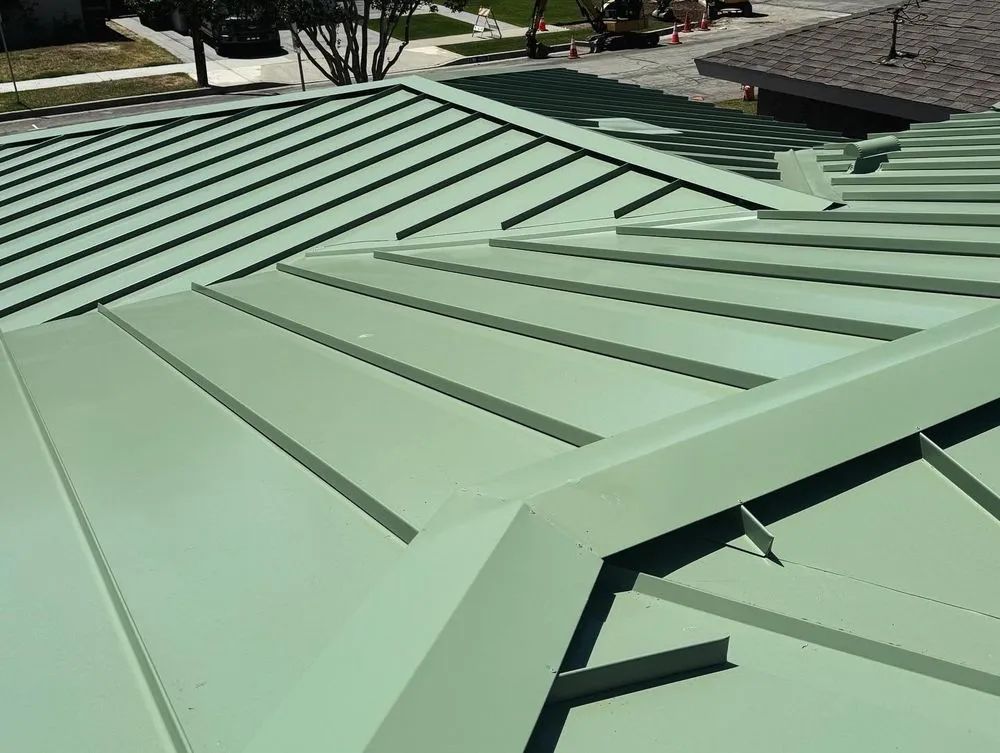
If your roof has more than one plane, meaning it's not a simple single-slope shed roof, you have at least one valley where two sections meet. Valleys carry more water than any other part of the roof because they collect runoff from both adjoining slopes and funnel it downward in a concentrated stream. During a heavy rain event, the volume of water moving through a valley can be several times what a flat section of roof ever sees.
Metal valley flashing is supposed to handle that load, but it only works if it's properly lapped, fastened without penetrating the water channel itself, and free of debris. Leaves, palm fronds, and the fine grit that blows in during Santa Ana wind events collect in valleys more than anywhere else on the roof. When debris dams up in a valley during a downpour, water backs up under the flashing edges instead of running straight down and off the roof. That backup is one of the most common reasons a ceiling stain appears directly under or near a roof valley after a hard rain.
If you can safely see your roof from a ladder or a neighboring window, take a look at the valleys first. Standing water, visible rust streaking, or a buildup of debris are all signs worth noting before you call anyone out.
Valleys are the first thing an experienced roofer checks, too. It's usually the fastest lead.
Flashing at Chimneys, Skylights, and Walls
The second most common leak zone is anywhere metal roofing meets something that isn't more roofing. Chimneys, skylights, dormers, and the point where a roof plane meets a vertical wall all require flashing, which is a separate piece of formed metal that bridges the gap and directs water away from the seam instead of into it.
Flashing takes a beating over the years. The caulking or sealant used to finish the edges dries out under UV exposure and starts to crack, usually well before the metal itself shows any wear. Once that seal fails, wind-driven rain can work its way behind the flashing lip during a storm, especially at chimneys where the masonry and metal expand at different rates and slowly pull the flashing loose at the corners.
If your ceiling stain is directly below a chimney, near a skylight, or along an interior wall that backs up to the roofline, flashing is the first place to suspect. This is also one of the more common repair calls after a rare heavy rain, because a flashing seal that held fine through years of light drizzle can finally give out under sustained, driving water.
Tip:
When you spot a stain, look straight up through the attic if you can access it safely. Water often travels along a rafter or sheathing seam before it drips through the ceiling below, so the wet spot on the drywall isn't always directly under the actual leak point on the roof. Tracing the path in the attic first can save you from chasing the wrong section of roof entirely.
Seams That Have Quietly Opened Over Time
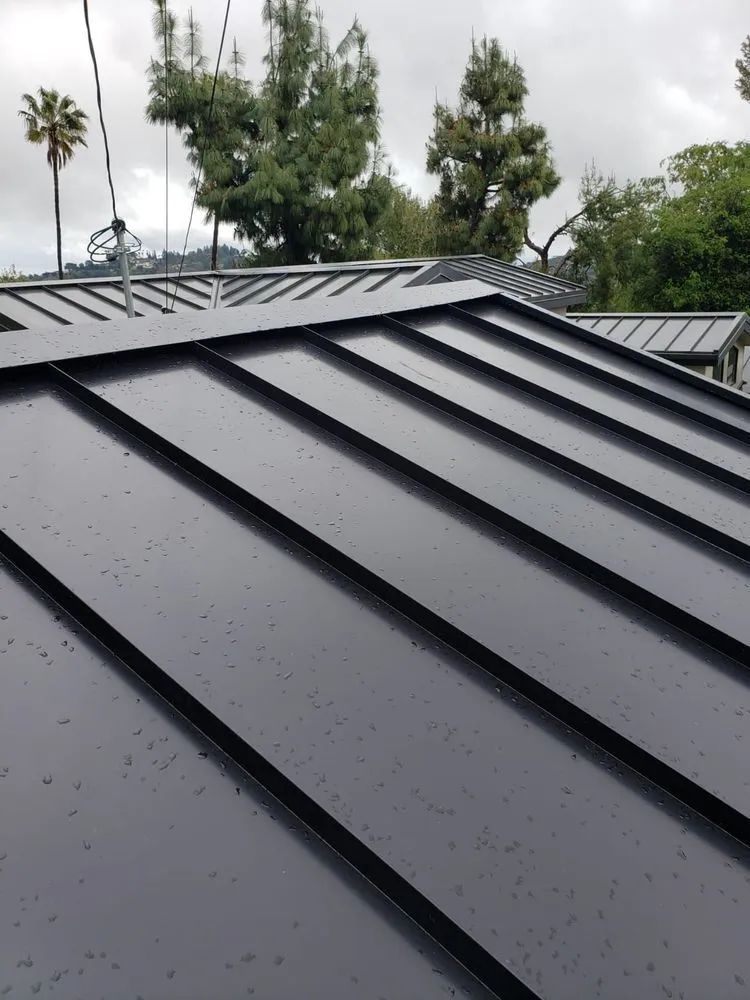
Standing seam and other panel-style metal roofs rely on interlocking seams to keep water out without needing exposed fasteners across the field of the roof. Those seams are engineered to flex with thermal movement, but flexing thousands of times a year eventually takes a toll. A seam that was crimped tight during installation can loosen slightly as the panels expand and contract, especially near the ends of runs or around ridge caps where more metal comes together in one spot.
A loosened seam usually isn't obvious from the ground. It might not leak at all during light rain, since gravity keeps water moving downhill and away from a slightly open seam most of the time. It's the combination of heavy volume and wind-driven angle during a real storm that pushes water sideways into a seam gap it would otherwise never reach. That's part of why seam-related leaks tend to show up specifically after the kind of downpour LA doesn't see very often.
Backed-Out Fasteners on Exposed-Fastener Panels
Not every metal roof uses concealed seams. Corrugated and exposed-fastener panel systems rely on screws with rubber washers to seal each penetration point across the roof surface. Those washers are the roof's weakest link. Sun exposure dries out and cracks the rubber over years, and the constant expansion and contraction of the metal around the screw shank gradually works fasteners loose, sometimes just a fraction of an inch, which is all it takes.
A backed-out fastener with a failed washer becomes a direct path for water straight through the panel during a heavy rain. Because there are often hundreds of fasteners across a single roof, this is more of a numbers game than a single point of failure. Most fasteners hold fine for years. It only takes a handful going bad in the same storm to produce a ceiling stain that seems to come out of nowhere.
What the Location of the Stain Tells You
Ceiling stains aren't random in shape or position, and where yours shows up carries information. A stain near an exterior wall often points to flashing at that wall's roofline. A stain centered under a visible roof valley usually means debris backup or a flashing lap problem in that valley. A stain that appears in a fairly random spot in the middle of a room, especially in a single-story home, more often traces back to a fastener or small seam gap directly above, since there's less lateral travel distance for the water before it hits the ceiling.
It also matters how the stain grew. A stain that appeared suddenly and grew fast during one storm suggests a fairly direct, open path for water. A stain that's been slowly darkening over multiple storms suggests a slower drip, maybe from a partially failed seal that's degrading rather than one that's fully open. Either way, tracking when the stain first appeared relative to storm activity helps narrow down whether it's a sudden failure or a slow leak that finally became visible.
Warning: Don't attempt to walk a wet or recently rained-on metal roof yourself to inspect for loose fasteners or lifted seams. Wet metal is a lot more slippery than it looks, roof pitches in hillside neighborhoods are often steeper than they appear from the ground, and a fall from roof height is a serious injury risk. Leave hands-on inspection of the roof surface to someone with the right footwear, harness, and experience working on metal.
Flashing at Chimneys, Skylights, and Walls
The second most common leak zone is anywhere metal roofing meets something that isn't more roofing. Chimneys, skylights, dormers, and the point where a roof plane meets a vertical wall all require flashing, which is a separate piece of formed metal that bridges the gap and directs water away from the seam instead of into it.
Flashing takes a beating over the years. The caulking or sealant used to finish the edges dries out under UV exposure and starts to crack, usually well before the metal itself shows any wear. Once that seal fails, wind-driven rain can work its way behind the flashing lip during a storm, especially at chimneys where the masonry and metal expand at different rates and slowly pull the flashing loose at the corners.
If your ceiling stain is directly below a chimney, near a skylight, or along an interior wall that backs up to the roofline, flashing is the first place to suspect. This is also one of the more common repair calls after a rare heavy rain, because a flashing seal that held fine through years of light drizzle can finally give out under sustained, driving water.
Tip:
When you spot a stain, look straight up through the attic if you can access it safely. Water often travels along a rafter or sheathing seam before it drips through the ceiling below, so the wet spot on the drywall isn't always directly under the actual leak point on the roof. Tracing the path in the attic first can save you from chasing the wrong section of roof entirely.
Why Metal Roofs Still Outperform the Alternatives Here
None of this means metal roofing is a poor choice for the LA climate. If anything, the opposite is true. A properly maintained metal roof handles the region's intense sun exposure and hillside wind patterns better than most other roofing materials available. The issue isn't the material, it's that any roofing system needs its transitions, seams, and penetrations checked periodically, and a roof that goes years without heavy rain doesn't get the kind of natural stress test that reveals small problems early.
A rare downpour amounts to a pressure test on every weak point across the roof at once. That's uncomfortable when it produces a ceiling stain, but it's also useful information. Once a leak point is identified and properly resealed or repaired, that specific spot is typically stronger than it was before, since the fix addresses exactly the failure that caused the problem in the first place.
Frequently Asked Questions
Does a small ceiling stain always mean an active leak?
Not necessarily. A stain may come from water that entered during one storm and later dried. However, it confirms moisture reached the interior, so checking the underlying roof gap helps prevent leakage during future storms.
Can I tell where the leak is coming from just by looking at the roof from the ground?
Sometimes obvious problems like rust, lifted flashing, or valley debris are visible from the ground. However, small gaps around seams and fasteners are difficult to identify accurately without a closer inspection of the roof surface.
Is it normal for a metal roof to develop a leak after years of no problems?
Yes. Sealants, washers, and fasteners gradually deteriorate from heat, sunlight, and repeated expansion. A roof may perform reliably for years before heavy rain and wind finally expose small weaknesses that previously remained completely unnoticed.
Should I patch a leak myself if I can access the spot safely from an attic?
You can manage interior moisture temporarily by drying insulation or catching dripping water. However, the actual leak should be repaired at the roof surface using appropriate materials for the flashing, seams, fasteners, and panel system.
Will one leak point mean the whole roof needs attention?
Not usually. Metal roof leaks often come from one localized problem, such as damaged valley flashing or loose fasteners. Still, inspecting nearby areas can reveal other weakened components before they create additional leaks during storms.
How quickly should a leak like this get addressed once it's found?
A roof leak should be addressed promptly because repeated moisture can damage decking, framing, insulation, and interior finishes. Even when the stain appears dry, repairing the original entry point helps prevent problems during future rainfall.
A Clear Roof Inspection Prevents Repeat Leaks
A ceiling stain after heavy rain is a useful warning that something in the roofing system needs attention. On metal roofs, the problem is often concentrated around valleys, flashing, seams, or aging fasteners rather than across the panels themselves. Identifying that weak point early can prevent repeated water intrusion and protect the decking, insulation, framing, and interior finishes. Socal Sheet Metal, Inc. brings 10 years of experience inspecting metal roofing systems throughout Canoga Park, CA, with careful attention to these common leak-prone areas.
Because water can travel along rafters and sheathing before becoming visible indoors, the stain alone rarely tells the entire story. A complete inspection helps connect interior moisture patterns with the roof conditions above and determine whether the issue involves deteriorated sealant, loose hardware, debris buildup, or damaged flashing. Once the source is understood, the appropriate repair becomes much clearer. Keeping these vulnerable transitions maintained helps a metal roof remain dependable through intense California sunshine, seasonal temperature changes, strong winds, and occasional heavy downpours.