Loud Pinging and Popping From the Metal Roof? Why Expansion Is Normal (and When It's Not)
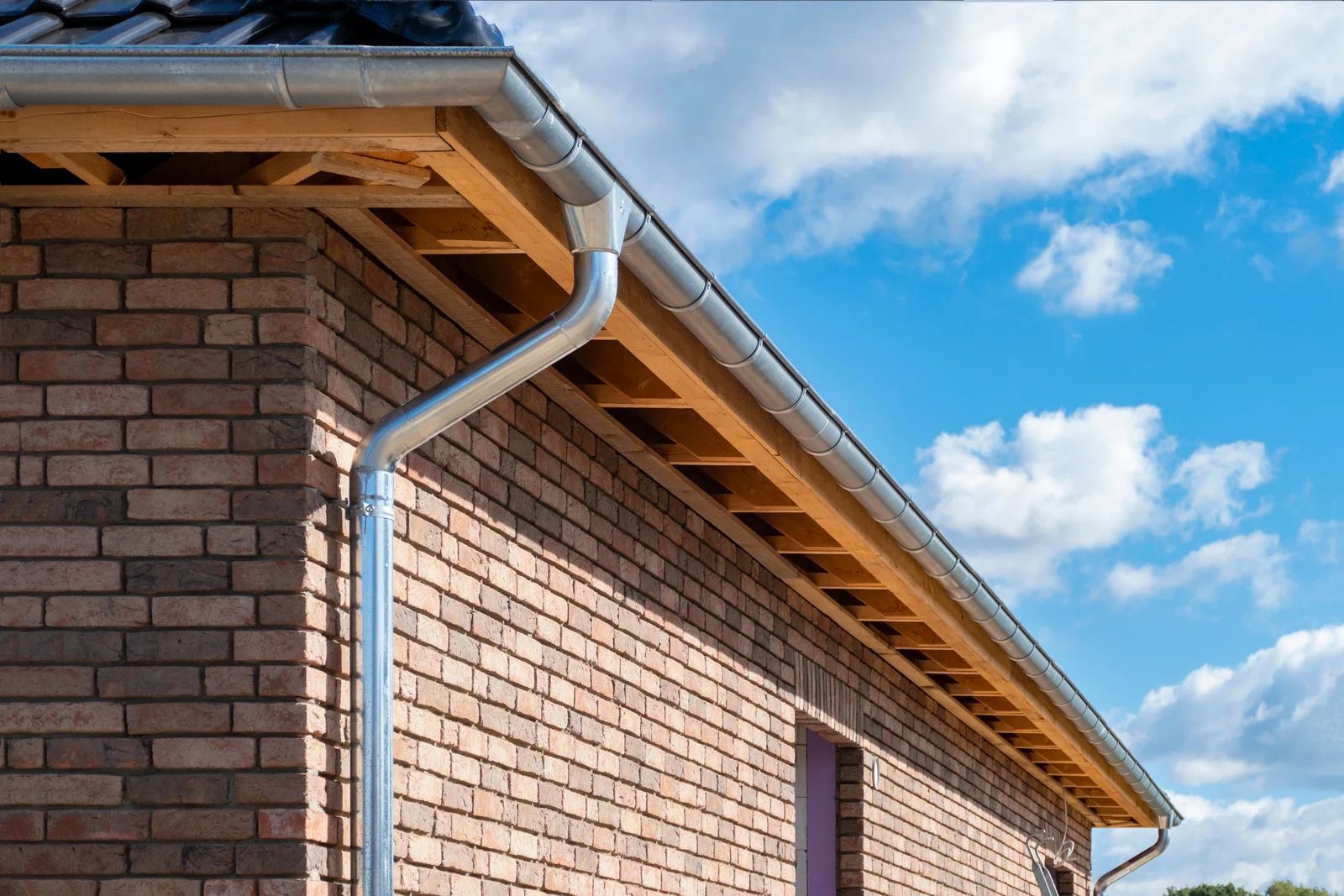
A proper assessment starts with mapping the actual drainage area feeding each downspout, not just eyeballing the roofline. That means accounting for every roof plane that sheds toward a given gutter section, any valleys that concentrate flow into a specific point, and the true square footage each outlet is responsible for, then comparing that against the downspout's rated capacity. Where a corner is taking on more than its outlet can move, the fix might be upsizing that specific downspout, adding a second outlet closer to the valley discharge point, or installing a diverter that breaks up the concentrated stream before it hits the trough. Sometimes it's a combination of two of those, since a bigger downspout doesn't help much if the water is still overshooting the gutter before it ever reaches the outlet.
Quick Answer: Most pinging and popping on a metal roof is thermal movement. Metal grows when the sun heats it and shrinks as the evening cools it, and the panel slips against its clips, fasteners, or trim in small jumps that sound like a pop. Sound that happens at sunrise and dusk, fades after a few minutes, and leaves no stains inside is usually normal. Sound that is new, constant, paired with raised screws, gaps at trim, or ceiling stains points to a binding clip, a loose fastener, or a flashing detail that needs attention.
It is a quiet evening in the San Fernando Valley. The sun has just dropped behind the hills, the house is settling into its dinner hour routine, and then it starts: a sharp ping overhead, a pause, another pop, then a slow tick tick tick that seems to walk across the ceiling. Your first thought is a prowler on the roof. Your second is that something has broken. Your third, after you walk the yard and see nothing, is a nagging question about whether the new metal roof was installed wrong.
In most cases the answer is much less dramatic. A metal roof is a large, thin sheet of material that spends the day absorbing sunlight and the night shedding heat, and it makes noise while it moves. The skill is in telling the harmless sounds from the ones that mean something. This guide breaks down what is happening up there, which noises are expected, and which ones deserve a closer look.
What Is Actually Making the Noise
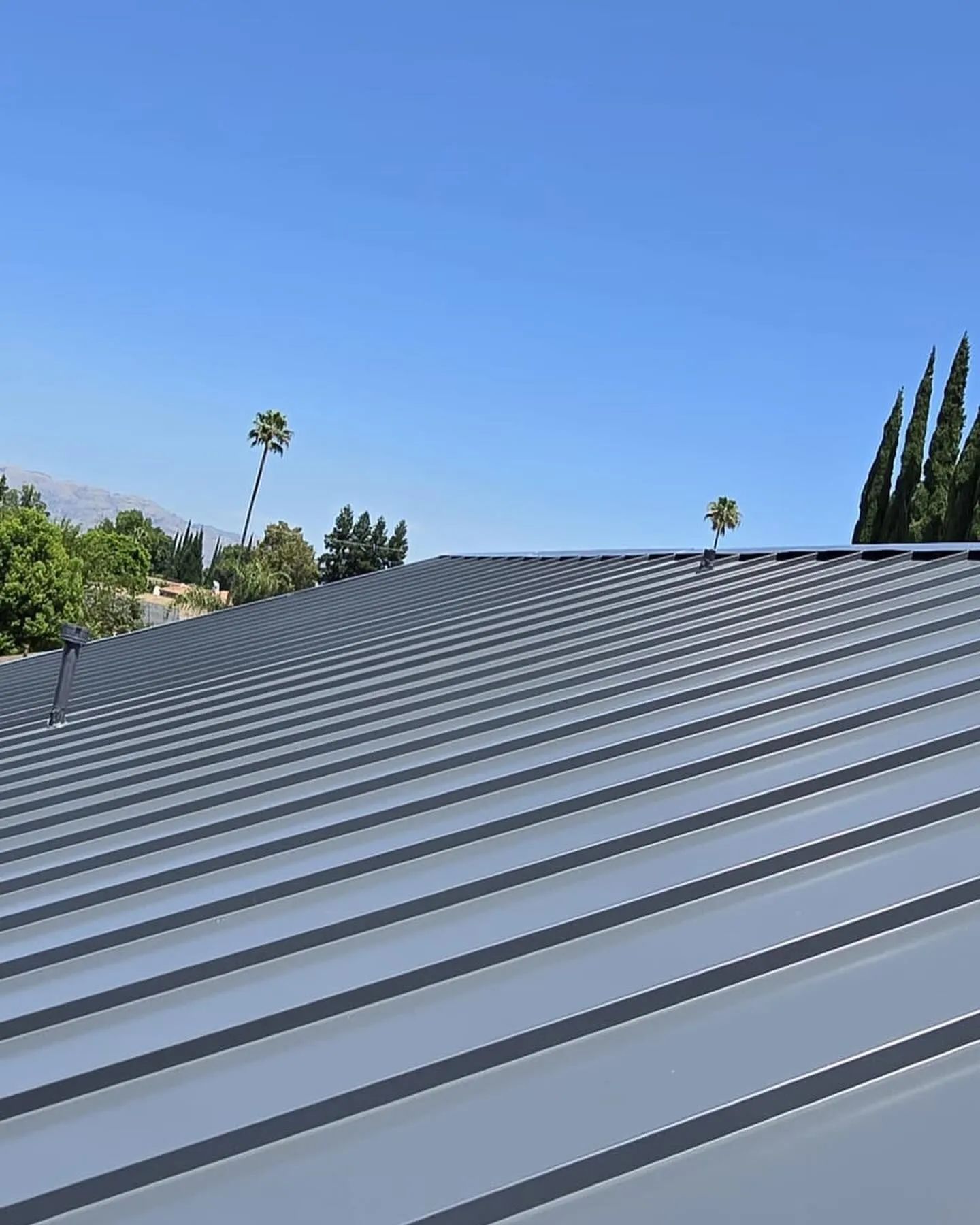
Every metal expands when it warms and contracts when it cools. A roof panel in Southern California can go from cool and shaded in the early morning to quite hot under direct afternoon sun, and then back down again after dark. A panel that is thirty feet long does not move far, but it moves enough. Roofing manufacturers describe a thirty foot steel panel as shifting roughly a quarter of an inch over a hundred degree swing, with aluminum of the same length moving noticeably more.
A quarter of an inch sounds small until you picture what is holding the panel. Clips, screws, trim hems, and underlayment all grip the metal. As the panel tries to grow, friction holds it in place until the push becomes stronger than the grip. Then it lets go all at once, sliding a tiny distance. That sudden release is the pop. It is the same physics as a stuck drawer that finally jerks open, only the drawer is a roof panel and the release is amplified by the open space of the attic underneath, which acts like the body of a drum.
That is why the sounds cluster at certain times of day. Noise is most common in the early morning and late afternoon, when the temperature is changing fastest. At midday the roof is hot and mostly steady. In the dead of night it is cool and mostly steady. The sounds come in the transitions.
Sounds That Are Usually Normal
Not every noise is a warning. These are the patterns that most often turn out to be ordinary thermal movement.
Sharp Pings Or Pops At Dusk And Dawn
One or two loud cracks followed by silence, especially after a cool stretch, usually indicate metal panels releasing built-up thermal stress.
Soft Ticking That Fades
Small ticks as the roof cools after a hot afternoon often reflect gradual panel movement. The sounds typically taper off within twenty minutes.
More Noise In The First Months
New roofs gradually settle as clips shift, underlayment compresses, and sealants cure. Popping often decreases as the installation adjusts over time.
More Noise After A Big Temperature Swing
Santa Ana winds and sharp day-to-night temperature changes increase panel movement. A previously quiet roof may become noisier during November's first cold snap.
Dark Colors Being Louder
Dark finishes absorb more heat, creating greater temperature changes in metal panels. Charcoal or bronze roofs may produce more thermal noise than lighter, reflective finishes.
Tip:
Keep a simple log for a week. Note the time, the weather, and how long the noise lasts. A pattern that tracks the sun, such as pops at 6 PM that settle by 7 PM, is nearly always thermal movement. A sound that does not follow the clock deserves a different explanation.
Where the Movement Gets Stuck
Because movement is expected, a well designed metal roof is built to allow it. This is the heart of the difference between a roof that sings and a roof that is simply quiet.
On a standing seam roof, the panel edges are held by clips that grip the seam while letting the metal slide. The panel floats on the clips, so it can lengthen and shorten without fighting a screw. When everything is working, the movement is smooth and nearly silent.
Noise gets louder when something prevents that smooth slide. The usual culprits are these:
Clips Overtightened Or Misaligned
Clips that pinch seams or sit crooked can restrict panel movement, causing sudden jumps. Fasteners should not clamp the sliding section tightly.
Panels Pinned At Both Ends
Long panels rigidly fastened at both the eave and ridge cannot expand freely. This creates stress across connections until movement produces loud popping sounds.
Trim Fastened Across The Movement
Ridge caps, rake trim, or flashing screwed through panels can restrict expansion. Stress builds until the metal shifts or releases suddenly.
Debris Or Burrs At A Clip
Metal shavings, leftover sealant tape, or rough edges can obstruct smooth panel movement, creating friction, scraping, and occasional popping noises.
Exposed Fastener Roofs
Corrugated and ribbed panels use face-mounted screws that restrict movement at each fastening point. Repeated ticking can indicate metal shifting against its fasteners.
Sounds That Mean Something Is Wrong
Now for the other side of the question. Some noises are not simply a roof stretching. Pay closer attention when you see any of the following.
Rattling Or Fluttering In Wind
Loose panels, lifted trim, or unsecured ridge caps can chatter in strong winds. New noises after a windstorm may indicate mechanical problems rather than thermal movement.
Constant Or Worsening Noise
Thermal pops usually come and go with sunlight. Noise that continues overnight or grows louder over time suggests another underlying issue.
Raised Screw Heads Or Flattened Washers
On exposed fastener roofs, raised screws indicate backing out. Flattened washers may no longer seal properly, allowing water into the holes.
Daylight Or Gaps At Trim And Flashing
Separated trim or visible gaps between metal components can allow wind and water underneath, increasing the risk of roof damage.
Water Stains, Drips, Or Damp Insulation
Noise accompanied by indoor moisture indicates a possible leak. Ceiling stains after Southern California downpours warrant prompt roof inspection to locate water entry.
Visible Waviness Or Dents
Rippling across flat panels, called oil canning, is usually cosmetic. Distortion around clips or fasteners may indicate localized stress or restricted movement.
Warning:
Do not climb onto a metal roof to find the source of a noise. Painted metal can be slick, panels can flex underfoot, and a fall from a one story eave can cause serious injury. Look from the ground with binoculars or a camera, or have a roofing professional do the walk.
Why Your Local Conditions Make It Louder
Southern California gives metal roofs a workout that more temperate places do not. The sun is intense for most of the year, which means a large rise in surface temperature during the day. Clear skies and dry air let that heat leave quickly after sundown, so the drop in temperature can be sharp, especially in the valleys north of the Santa Monica Mountains and inland toward Pasadena and Burbank. Add Santa Ana wind days, when the air is hot and dry and then suddenly changes, and the panels face repeated stress cycles.
Hillside homes in Malibu and the canyon neighborhoods bring another factor. Open exposure on all sides means the roof heats and cools faster, and wind can find any loose edge. A roof in a sheltered, tree shaded lot may be gentler on its panels than one on an exposed ridge.
Roof design matters here too. The attic below acts like an echo chamber. A vented attic with space between the underside of the roof and the insulation tends to make noise sound louder than a roof over a solid deck with underlayment, which damps the sound. If your roof sits over open framing, you will hear the movement more than a neighbor with a closed deck.
Flashing at Chimneys, Skylights, and Walls
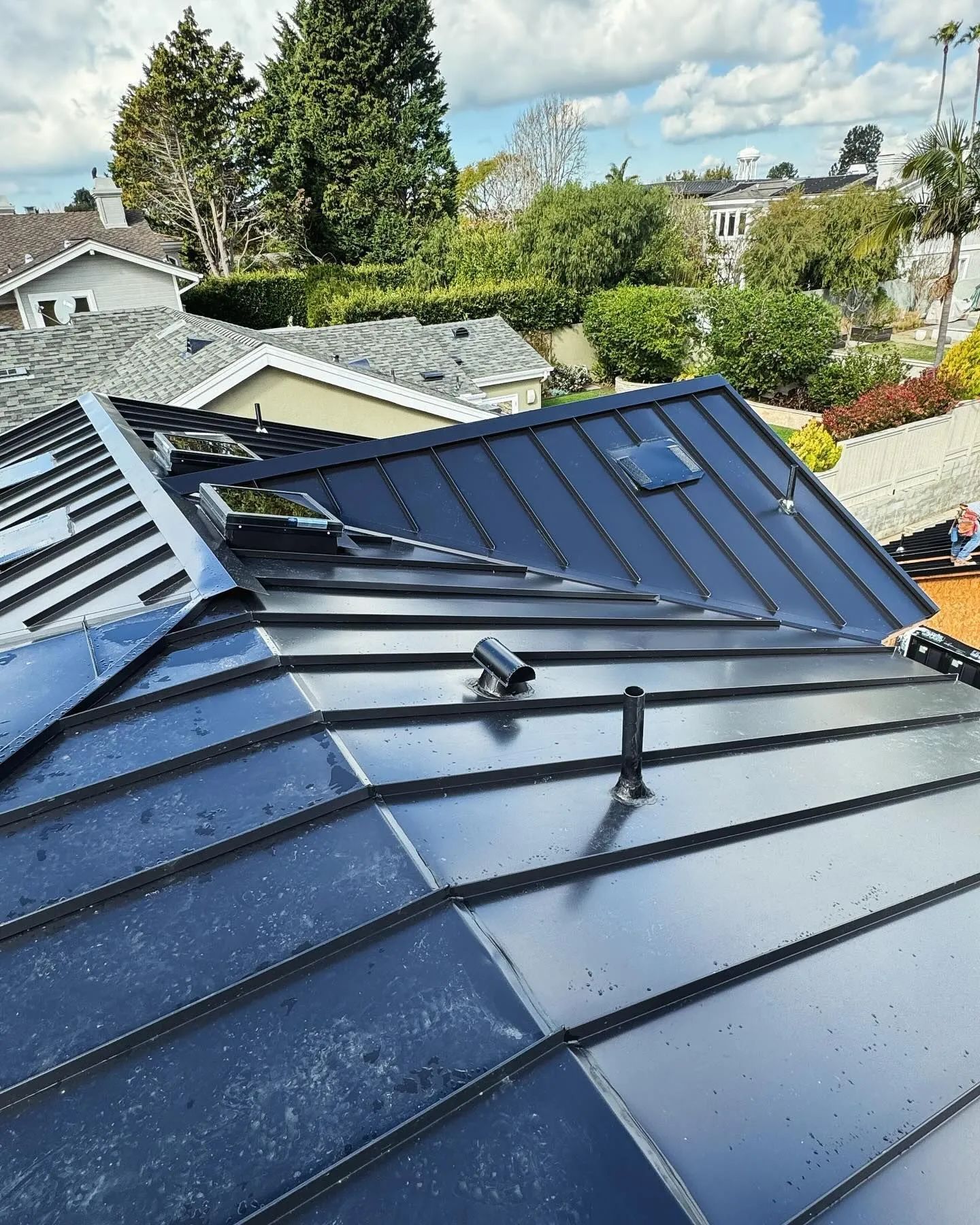
The second most common leak zone is anywhere metal roofing meets something that isn't more roofing. Chimneys, skylights, dormers, and the point where a roof plane meets a vertical wall all require flashing, which is a separate piece of formed metal that bridges the gap and directs water away from the seam instead of into it.
Flashing takes a beating over the years. The caulking or sealant used to finish the edges dries out under UV exposure and starts to crack, usually well before the metal itself shows any wear. Once that seal fails, wind-driven rain can work its way behind the flashing lip during a storm, especially at chimneys where the masonry and metal expand at different rates and slowly pull the flashing loose at the corners.
If your ceiling stain is directly below a chimney, near a skylight, or along an interior wall that backs up to the roofline, flashing is the first place to suspect. This is also one of the more common repair calls after a rare heavy rain, because a flashing seal that held fine through years of light drizzle can finally give out under sustained, driving water.
Tip:
When you spot a stain, look straight up through the attic if you can access it safely. Water often travels along a rafter or sheathing seam before it drips through the ceiling below, so the wet spot on the drywall isn't always directly under the actual leak point on the roof. Tracing the path in the attic first can save you from chasing the wrong section of roof entirely.
What a Roofer Checks When You Call About Noise
A good inspection is not a guess at what the noise might be. It follows the movement. Here is what a sheet metal contractor typically looks at.
The Clip Pattern And Clip Condition
Check whether clips allow panel movement and sit squarely on seams. Overdriven fasteners can restrict sliding and cause panels to bind.
Panel Length And Fixed Points
Each panel should have one fixed point, usually near the eave, while remaining free elsewhere. Multiple fixed points can create damaging stress.
Trim And Flashing Attachment
Ridge caps, hip and rake trims, valleys, and penetration flashing should allow panels to move underneath without restricting thermal expansion.
Fasteners On Exposed Fastener Roofs
Look for loose screws, hardened washers, and oversized holes. Replacing worn fasteners, washers, and resetting tired laps can reduce noise and protect the roof.
Signs Of Water
Check for underlayment stains, damp insulation, and rust around fasteners. These signs help determine whether the noise also involves moisture intrusion.
Many noise complaints turn out to be fixable without replacing a panel. Adjusting a clip, relieving a trim piece that is fastened too tightly, adding a slip joint, or replacing a few worn fasteners can change a loud roof into a quiet one. The goal is realistic: reducing the sound and the stress behind it rather than eliminating every tick, since no single practice fully removes thermal noise from metal.
Frequently Asked Questions
Is it normal for a brand new metal roof to pop?
Yes. A new roof is still settling, and the first seasons of heating and cooling often produce the most noise. Many roofs grow quieter with time as clips and panels find their positions.
Why does the popping happen in the evening and not during the day?
The roof changes temperature fastest at dusk, so the panels contract quickly and release stress against their clips. During midday the temperature is more constant, so movement is slower and quieter.
Can the noise damage my roof?
Normal thermal sounds do not harm a properly installed roof. The concern is the cause. If a panel cannot move freely, repeated stress can enlarge screw holes or fatigue trim connections over many years.
Does a standing seam roof make less noise than a corrugated roof?
It can, because hidden clips let the panel float, while exposed screws pin the metal and make it work against its own fasteners. Neither roof is silent, and installation quality matters as much as the profile.
Will adding insulation or underlayment help?
Often yes. A solid deck with quality underlayment tends to absorb and damp the sound, and insulation below the deck keeps the attic from amplifying it. Ask about this during the roof plan rather than afterward.
When should I call a roofer instead of waiting it out?
Call when the noise is new and constant, when you see raised screws or open trim, after a strong wind event, or whenever you notice moisture inside. Those signs point to a mechanical or water cause.
Learn the Difference in Your Roof’s Voice
A metal roof talks, and most of what it says is the sound of a large sheet of metal responding to the sun. A few sharp pings at sunset are rarely a reason to worry. What matters is the pattern. Noise that follows the clock, clusters at dawn and dusk, fades within minutes, and leaves everything dry inside is normal thermal movement. Noise that rattles in the wind, arrives with raised fasteners or loose trim, or comes alongside a ceiling stain is a different message.
That second kind is the roof asking for help, and learning to tell it apart is what keeps a noisy roof from quietly becoming a leaking one. Socal Sheet Metal, Inc.
has spent 10
years tracing these sounds back to their clips, trim, and fasteners in Canoga Park, CA, where intense sun and sharp evening cooling give panels plenty to say. A quiet, sound roof is rarely luck. It comes from letting the metal move freely and checking the few sounds that do not follow the sun.